She Had to Go: The Identity Deaths That Built My Confidence

I can point to a few versions of myself that had to die before I could become who I am now.
That sounds dramatic, but I don’t know how else to explain it.
There are seasons of life that don’t just change your routine or your location or your relationship status. They change your entire identity. The way you see yourself, the way you move through the world, the things you believe about who you are and what you deserve.
And in the moment, it feels like losing yourself.
Looking back, I think it was the beginning of finding myself.
I am 31 years old. I have lived through three major identity deaths: seasons so disorienting and so painful that the version of me who walked into them was not the version who walked out. And all three of them, in retrospect, gave me something I could not have built any other way.
This is not a story about how pain is secretly good or how everything happens for a reason. It’s more honest than that. It is a story about what I found on the other side of losing myself and why, as terrifying as those seasons felt, I can’t honestly say I would take any of them back because I wouldn’t.
What I Mean by “Identity Death”
I’m not using “death” loosely here.
Identity death is the moment when a version of you disappears and you realize, with total clarity, that you cannot go back to who you were.
It can happen after a move, a breakup, motherhood, a loss, a major transition, a friendship ending, or an honest look in the mirror that reveals a coping mechanism that has been quietly working against you. It doesn’t always announce itself. Sometimes you only recognize it once the dust settles and you look around and realize you are someone different now.
Research on narrative identity suggests that the way we make meaning from difficult life experiences is directly connected to our mental health and personal growth over time. In other words: it’s not just what happened to you. It’s what you decide to do with the story.
When I look back at the versions of me I’ve left behind, I sometimes think I miss them. But when I’m honest with myself, I know that although I loved the good things in those versions, they had to go so I could grow. That tension, grief and gratitude existing at the same time, is what identity death actually feels like.
Important: Calling something an identity death does not mean the old version of you was bad. Sometimes she was just surviving with what she had. That matters.
The First Identity Death: The Girl Who Got Pulled Out of Ohio
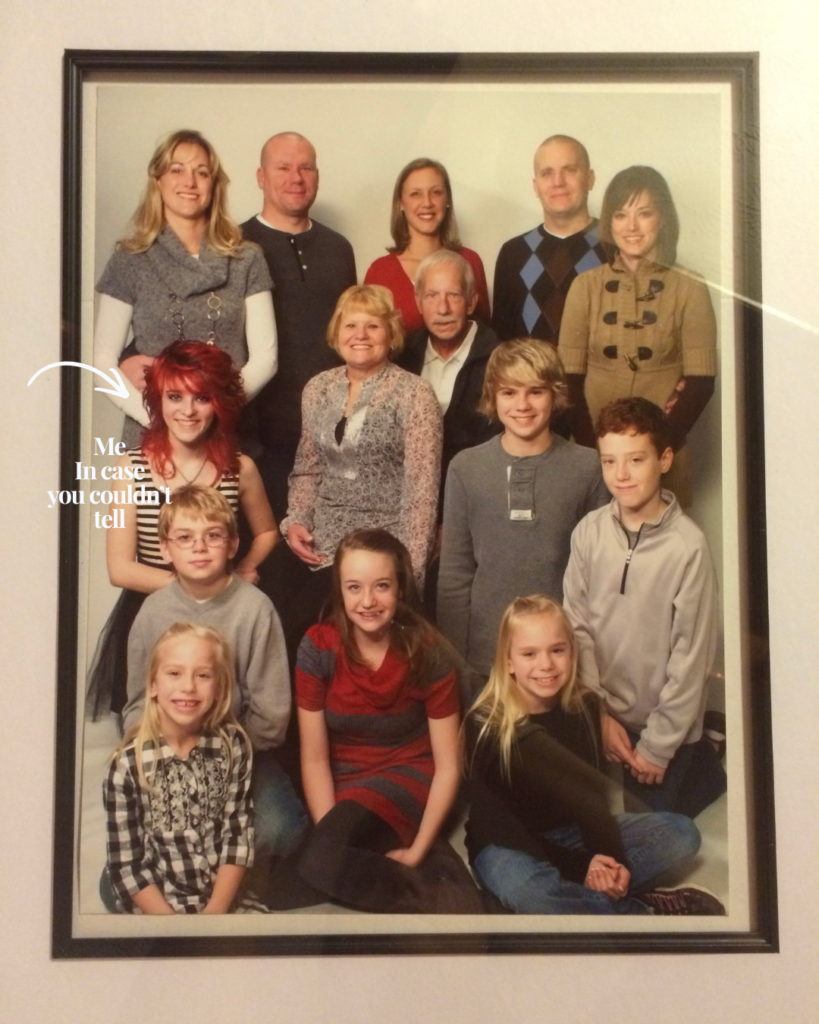
I grew up in Ohio from the time I was three years old until I was thirteen. I played lacrosse and was genuinely good at it, I had dreams of playing at Ohio State one day. I was a normal preteen girl with normal preteen interests. I felt like I knew exactly who I was and where I was going, my hair had never even been dyed.
Then my family moved right as I started eighth grade.
I want to be careful not to minimize what that felt like. It was not just inconvenient or uncomfortable. It felt like being ripped out of my own life. My team. My school. My people. Everything that made up my identity at thirteen years old, gone.
Adolescence is one of the most critical stages for identity development. Research confirms that identity formation during this period involves both maturation and stability and that disruptions to belonging, social identity, and self-concept during this window can feel uniquely destabilizing. Looking back, that tracks. I was in the exact season where I was figuring out who I was, and then the environment I was figuring it out inside of completely disappeared.
I became severely depressed. I was angry, negative, and desperate to find a way back. I purposely failed classes, me, a straight-A overachiever my entire life, thinking my parents might send me back to live with my grandma. I wanted out.
And because there was no lacrosse program where we moved, I said forget it. Not because I actually wanted to quit sports. As an act of rebellion. A way of saying I don’t belong here and I’m not going to pretend otherwise. I still think about that decision. I will probably always wonder what might have been.
This identity death did not feel like growth at the time. It felt like punishment. But it was one of the first moments that taught me how deeply environment can shape who we believe we are and how much of our identity is actually portable.
“Sometimes the first version of you that dies is the one who thought life was going to stay familiar forever.”
The Version of Me Who Became the Emo Kid
I did eventually cheer up. A little.
But I never went back to the Ohio version of myself. Not even close.
I became a true emo kid. My social group looked nothing like what I had before. I leaned hard into post-hardcore and punk rock which, I still love. That was always somewhere inside me. But the anger, the depression, and the rebellion shaped how it came out.
I stopped caring about sports. I started smoking weed and getting into mild, normal teenage trouble at house parties, including the ones I threw when my parents were out of town. I was not making great decisions, but I was also just a kid who had lost her footing and was trying to find something to hold onto.
I didn’t just change interests. I changed the way I saw myself.
I want to be honest about this version of me without being judgmental about her. She was real. She was fun in her own chaotic way. She was carefree and completely uninterested in anyone’s approval. I still love that about her. But she was also built almost entirely around pain, rebellion, and being anti-everything-about-where-I-lived.
That was not a foundation. That was a response. And eventually, life would force me to build something more solid.
The Second Identity Death: The Girl Who Ran Away to Georgia
I moved to Georgia with a boyfriend right after graduating. I dropped out of college without telling my parents. I packed up my life and left, and at the time it felt like finally, finally, getting away from the place that had taken so much from me.
In reality, I was still running. The location changed. The core wound did not.
Then came the breakup.
It was the worst breakup of my life. One of the hardest things I had ever experienced. He had his friends move into the house we had shared, and I was kicked out. I was in a different state from my parents. I was entirely, completely, for the first time in my life, alone.
And I want to tell you what happened after the sadness passed, because it is the most important part of this article:
Everything changed.
Not slightly. Not eventually. Fundamentally, entirely, from the inside out.
“The breakup did not save me because it was painless. It saved me because it forced me to meet myself.”
The Breakup That Forced Me to Become Myself
After the sadness lifted, something shifted in a way I didn’t have a name for at the time.
My depression lifted. My anxiety lifted. For the first time in my life, I felt genuinely, deeply mentally healthy. I knew myself. I had a clarity that I had never been close to before.
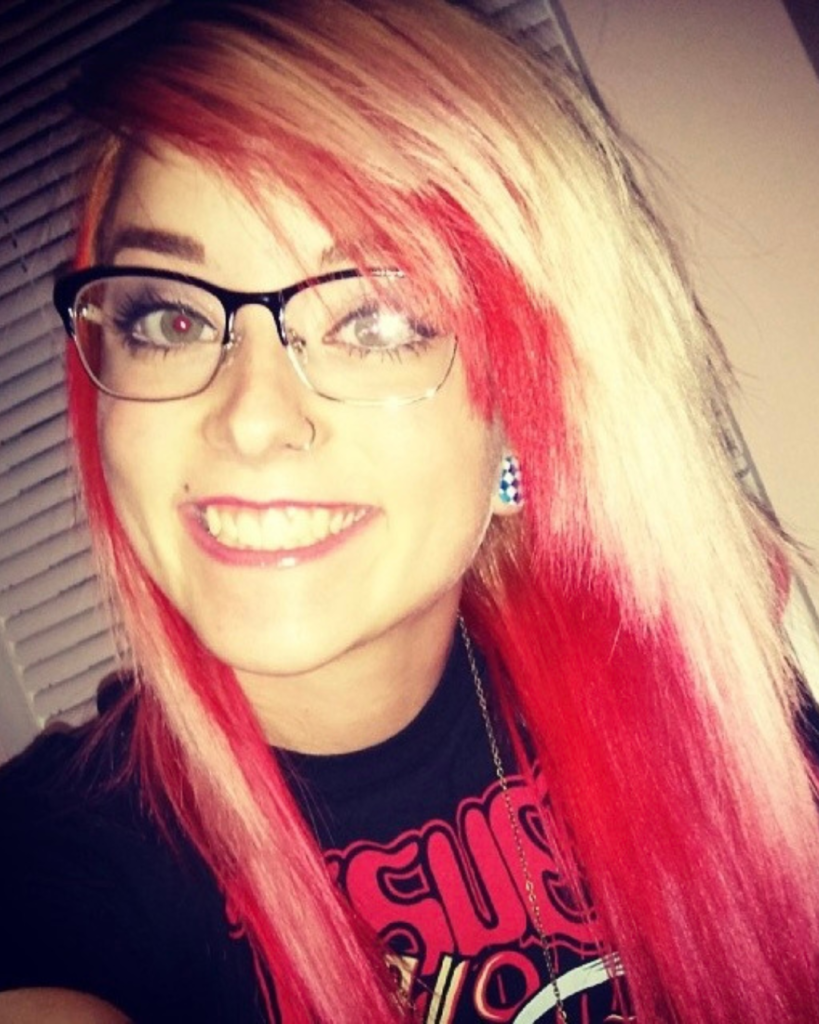
And then, something else: I went to being blonde. I stopped wearing all black. I started choosing a brighter, sunnier version of myself on the outside because it was supporting a brighter, sunnier version on the inside.
The outside changes were not the healing. They were symbols of the healing.
I am a firm believer that how we present ourselves to ourselves matters. When I look in the mirror and see someone who looks lighter, I feel lighter. When I was surrounded by dark colors and an identity built on rebellion and opposition, it reinforced a darker internal state. Once I chose differently on the outside, something gave me permission to choose differently inside too.
But the deeper shift was this: I stopped seeing people through a lens of cynicism. I gave everyone a clean slate. A judgment-free chance. I started seeing people through “love goggles”, choosing to look for what is good in a person before I look for what is wrong.
My insecurities, the ones that had been rooted in comparison and judgment of others for years, completely melted away. And they have not come back in the same way since.
This is also where my simplicity vs. complexity framework started forming. The idea that life is actually simple, and it’s our minds that make it complex. More on that in [Simplicity vs. Complexity].
Reminder: I’ll go deeper into the confidence shift and healing from my high school insecurities in a future article, because that transformation deserves its own moment. But it starts here. [Healing From My High School Insecurities] — coming soon.


The Confidence Shift That Changed Everything
I want to be clear about something here, because I think it matters.
The confidence I built after the Georgia breakup was not the kind that looks good in photos and crumbles the moment someone says something harsh. It was not performative. It was not conditional on whether the right people liked me.
It was internal. And it came directly from being forced to know myself without anyone else’s presence to hide inside of.
Research on narrative identity tells us that when people are able to integrate difficult experiences into a coherent personal story, that process supports healthier identity development and psychological well-being over time. That is exactly what happened for me, not because I journaled about it or went to therapy, but because I was completely alone with myself long enough to decide what I actually believed about who I was.
The comparison mindset that had quietly fueled my insecurities for years, looking at other women and measuring myself against them, either diminishing them or feeling diminished by them, simply stopped. When you genuinely give everyone a fair chance and stop needing to rank yourself in relation to others, the insecurity that depended on that comparison has nothing left to feed on.
That is the version of me that exists today. And it started in the rubble of the worst breakup of my life. For that, I am, genuinely, grateful.
The Third Identity Death: Becoming a Mom and Losing Myself in Guilt
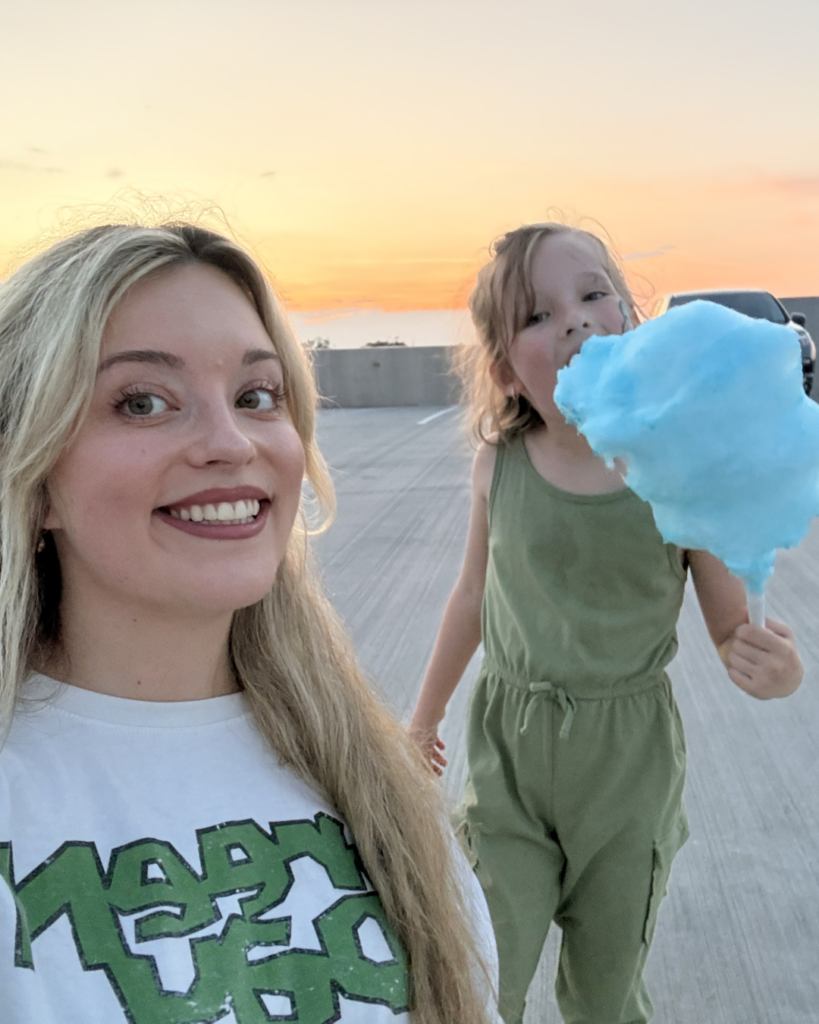
I want to preface this section with something important: I love my daughter more than any words I can write here could convey. What I’m about to share is not a reflection of my love for her. If anything, it is a reflection of how deeply I wanted to be everything she deserved and how cruelly that desire turned against me.
Becoming a mom created a new version of me. At first, it was beautiful. And then the mom guilt arrived, and it turned that era into one of the darkest of my life.
The research on the transition to motherhood describes it as involving profound physical, psychological, social, and relational changes, a full restructuring of self-concept, relationships, and emotional adjustment. What the research can’t fully capture is how specific the guilt felt. This was not imposter syndrome in the way my teens and early twenties were. This was a quiet, relentless conviction that I was failing my daughter simply by being a less-than-perfect person.
Guilt that I was doing things wrong. Guilt that I was less than she needed. Guilt that she deserved the absolute best and I could not figure out how to be it.
And here is the part that still surprises me: instead of making me a better mom, the guilt made me more selfish. I convinced myself she would be happier without me. That she was already so much more, in her first couple years of life, than I had ever been in mine, and I was somehow dragging that down.
So I started spending more time out. Away from my family. Drinking with friends. Trying to feel better. Trying to outrun a guilt that I could not actually escape.
Drinking made the next-day anxiety unbearable. I would cry for days. I had suicidal thoughts. I felt genuinely undeserving of my family’s love. It was a very dark place.
I’m not sharing this because it is easy to admit. I’m sharing it because I know I’m not the only woman who has tried to escape guilt in ways that only made the guilt louder.
The National Institute on Alcohol Abuse and Alcoholism notes that depressive disorders, anxiety disorders, trauma-related disorders, and sleep disorders commonly co-occur with alcohol use, and that alcohol can worsen existing mental health patterns for many people. For me, the drinking was not causing the darkness. But it was absolutely amplifying it.
A vulnerable note: This section is not about glamorizing a dark season. It is about being honest that sometimes the coping mechanism we reach for is the exact thing keeping us stuck. And sometimes it is something familiar that slowly, quietly turns against us.
If you are in a similar dark place right now, not a past place, but right now, please reach out to someone. The 988 Suicide and Crisis Lifeline is available 24/7 by call or text. You do not have to stay in that place alone.
The Version of Me Who Quit Drinking
I stopped drinking so I could focus.
It sounds simple. It was not simple.
I lost friends. I stopped getting invited to things. The people I had spent years with in that social world didn’t know what to do with me once alcohol was not part of the equation. I felt, for a while, like I constantly had to prove that I could still hang, that my personality had not evaporated along with the drinks. Friends have always told me that I always seem “happy and unbothered,” so no one really saw how much it affected me to be left out of things. But it hurt my feelings, because it meant they couldn’t see the work it was taking.
I even considered drinking occasionally just to maintain the relationships. I am genuinely grateful I was too far into my mental growth to follow through with that.
What I discovered instead was this: my personality was never the alcohol. I was still me without it. I could stay up late, be social, be completely present and genuinely fun, sober. The identity I had wrapped around drinking was not my actual identity. It was a costume I had put on so gradually that I had stopped noticing I was wearing it.
“My personality was never the alcohol. I was still me without it.”
The friends who stayed were the friends who mattered. And the confidence, the clarity, the independence that came out of that season, were the magnitude in which I had experienced coming out of my GA break up. It all came back to me in a wave. I was choosing my daughter and my family over the anxiety and depression that had been quietly controlling me like it hadn’t since that identity right out of high school. That was not a small decision.
This is also where the Art of Being a Better Female Friend became real to me in a new way. [The Art of Being a Better Female Friend].
The Version I’m Becoming Now
It has been a while since my last major identity shift. Long enough that I have found a rhythm, a stability, a version of myself that feels genuinely like home.
And now I am entering another one.
I am restarting the newborn phase after five years. Another baby. Another complete restructuring of daily life, identity, and routine. And I know it will still have its tough moments.
But here is what is different this time:
I am not afraid of identity deaths anymore. I have been through enough of them to know that what comes out the other side is something worth pushing through for.
I have a confidence in being a mom now that I desperately needed the first time. I know the difference between struggling and surrendering to the darkness. I will not willingly go back to the complex, consuming mental place that once swallowed me whole.
I cannot promise I will never struggle again. But I can promise I know the difference between struggling and surrendering.
I have learned. I have grown…a lot. And that is the plan for the rest of my life.
Why Identity Deaths Can Become Gifts
My three major identity deaths:
• Losing Ohio:: the preteen version of me who had a plan and had it taken away
• The Georgia breakup:: being forced to be alone, truly alone, for the first time
• Motherhood guilt and quitting drinking:: rebuilding my adult identity into someone I respect and recognize completely
None of these felt like gifts when they were happening. They felt like loss, like punishment, like proof that something was wrong with my life or with me.
But the research on post-traumatic growth offers a framework that I think is more honest than “everything happens for a reason.” Researchers including Tedeschi have identified that people who struggle through highly challenging life events can experience profound positive change: improved relationships, new possibilities, greater personal strength, a deeper appreciation for life, and spiritual or existential development. As many as 89 percent of survivors report at least one aspect of growth.
But here is the part that matters most: growth is not guaranteed. Pain does not automatically produce a better version of you. The growth comes from what happens after: the processing, the choices, the willingness to make meaning from what broke you, and the decision to rebuild.
That is the part I am responsible for. That is the part we are all responsible for.
“The gift was not the pain. The gift was the version of me I built after it.”
What My Identity Deaths Taught Me
Lesson 1: You can grieve a version of yourself and still be grateful she existed.
My Ohio self, my emo self, my Georgia self, my party-girl self, my new-mom-in-the-dark self, they all mattered. They were all real. They all brought something with them. Grief and gratitude are not opposites.
Lesson 2: Sometimes the thing that breaks your identity is also the thing that reveals your real one.
The breakup stripped away noise and forced me to be alone with myself. That was the most clarifying thing that has ever happened to me. I could not have found that clarity any other way.
Lesson 3: Confidence is not built by never falling apart.
It is built by rebuilding with more insight each time. Every identity death taught me something new about who I actually am under the surface and that knowledge compounds.
Lesson 4: You are allowed to outgrow the coping mechanisms that once helped you survive.
Rebellion, negativity, drinking, emotional escape. These things served a version of me that needed them. Outgrowing them was not betraying her. It was graduating past what she needed.
Lesson 5: The old version of you was not stupid. She was surviving.
This one matters. Be gentle with who you used to be. She was doing her best with what she had. She got you here.
This connects to something I wrote about more fully in [How Fathers Shape Their Daughters’ Confidence] and to the way I want my daughter to understand her own seasons of falling apart. More on that in [To My Daughter: The Lessons I Hope You Never Have to Learn the Hard Way].
How to Move Through Your Own Identity Death
If you are in the middle of one of these seasons right now, if you can feel a version of yourself slipping away and you don’t know what is on the other side, here is what I’d want someone to tell me:
Name what changed
Ask yourself:
- What version of me am I grieving?
- What did she believe?
- What did she need?
- What can I thank her for?
The act of naming it takes away some of its power to quietly consume you.
Do not force the lesson too early
You do not have to call something a gift while it is actively hurting you.
The meaning does not have to be present in the moment. Sometimes it only becomes clear once you are far enough away to look back. Give yourself permission to just be in it first.
Choose one small symbol of the next version
A new routine. A color you hadn’t worn before. A boundary that would have terrified the old version of you. A different way of spending Sunday morning.
Something small that says: I am becoming something else now, and I get to decide what.
Pay attention to what makes you feel complex vs. simple
This is the framework I keep coming back to, the idea that most things are actually simpler than we make them, and that complexity is usually our minds adding weight that doesn’t belong to the moment.
When something consistently makes you feel heavy and spinning, pay attention. When something makes you feel clear and grounded, pay attention too.
Let the right people stay close
Some people will only know how to love the old version of you. They will not know what to do with who you are becoming. That is not a flaw in you and it does not mean you need to shrink back into who you were to keep them comfortable.
The people who love all your versions? Those are the ones you hold onto forever.
Reminder: You do not need to call something a gift while it is actively hurting you. Some meanings only become clear after you have made it to the other side. That is valid.
The Old Me Got Me Here
I used to think that losing a version of myself meant I had failed.
Now I think it means I was growing.
I have been the girl who wanted nothing more than to go back. I have been the girl who ran away. I have been the girl who fell apart after a heartbreak she did not see coming. I have been the mom who got completely lost in guilt. I have been the friend who felt like she had to prove she was still fun sober.
And every single one of those versions got me here.
So to me, identity death is not the end of who you are. It is the moment life asks:
“Are you ready to learn more of yourself?”
I have said yes every time. Not always gracefully. Not always on purpose. But always, eventually, yes.
And I am so glad I did.
If this resonated, save it or share it with someone who is in the middle of their own season of becoming. And come find me on the blog for more in this series.
Short on time? Pin it for later! 🌅📌

Sources
- Adler, Jonathan M. “Variation in Narrative Identity Is Associated with Trajectories of Mental Health.” Psychology of Well-Being, 2015.
- American Psychological Association. “Growth After Trauma.” Monitor on Psychology, 2016.
- Branje, Susan. “Dynamics of Identity Development in Adolescence.” Child Development Perspectives, 2021.
- Hwang, Woon Young, and Hyun Sook Choi. “Concept Analysis of Transition to Motherhood: A Methodological Study.” Korean Journal of Women Health Nursing, 2022.
- National Institute on Alcohol Abuse and Alcoholism. “Alcohol Use Disorder and Common Co-occurring Conditions.” NIAAA, 2025.
- Tedeschi, Richard G. “The Post-Traumatic Growth Approach to Psychological Trauma.” World Psychiatry, 2023.