You Know Who You Are… So Why Does Social Media Make You Question It?
Understanding imposter syndrome and learning to overcome self-doubt online

You open the app.
You’ve created something you love. Something that feels like you. You’re ready to post it.
And then… you hesitate.
Who am I to share this?
Not because you don’t know the answer. In real life, you do. You are fully qualified to love what you love, share what you know, and take up the space you’ve earned. That part is not in question.
But online? Something shifts.
Something quieter and harder to name takes over. And suddenly, the version of you that is confident, capable, and completely secure in who she is…starts feeling a little unsure…
I struggle with this on a daily basis. And I’m writing this because I think a lot of women do too, even the ones who look the most put-together from the outside.
Let’s Call It What It Is: Imposter Syndrome
Imposter syndrome is the internal experience of believing you are not as competent, creative, or deserving as others perceive you to be, despite clear evidence to the contrary.
It’s that quiet voice that convinces you you’ve somehow fooled everyone around you, and that it’s only a matter of time before someone notices.
It’s more common than most people realize.
Research published in the International Journal of Behavioral Science estimates that up to 70% of people will experience imposter syndrome at some point in their lives. A more recent systematic review put that number even higher, up to 82%, with women being more likely to report these feelings in professional and creative spaces.
So if you’ve felt this way, you are in very good company.
That doesn’t make it less frustrating. But it does mean you are not alone in it and you are not broken because of it.
“I Don’t Feel Like This in Real Life”
Here’s the thing that makes this so disorienting:
I’m a confident person in the real world.
In real life, I know who I am. I know what I’m good at. I know I’m fully qualified and allowed to love the things I do, share my passions, and take up space.
But online? I feel like a straight up poser.
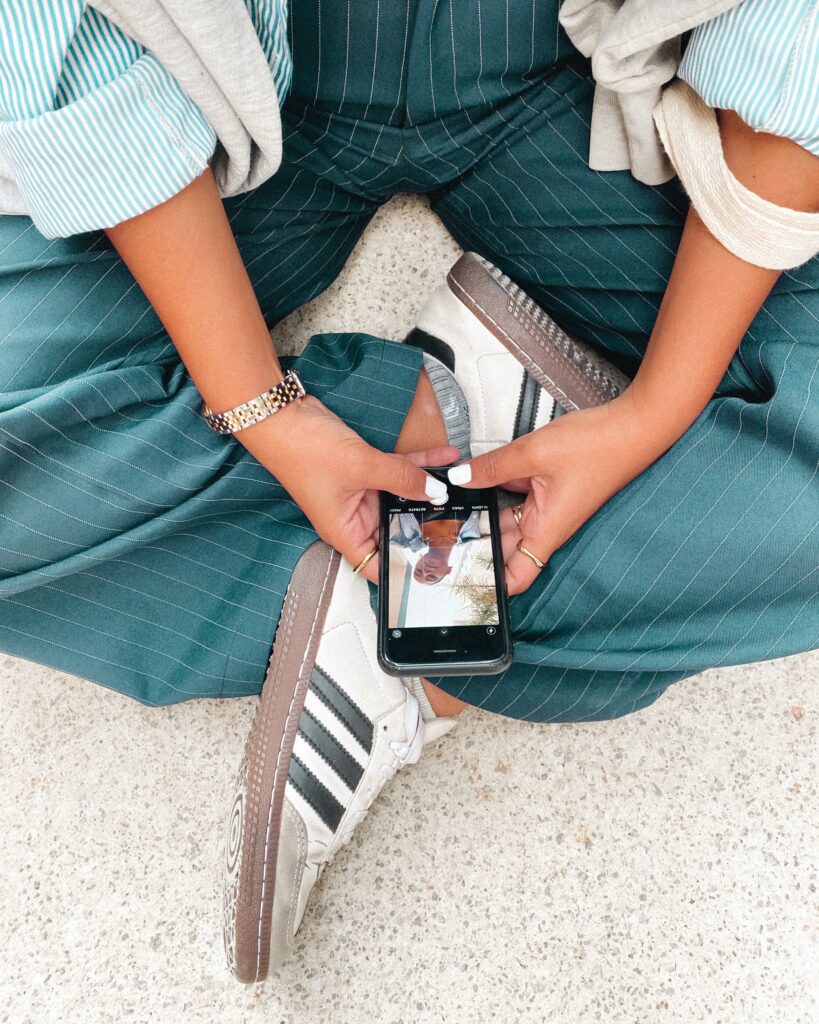
The girls who post the things I love: the colors, the aesthetics, the vibes, the energy…they seem so well put together. So clear on who they are. So settled in their identity.
And when I post the same things I genuinely love, something in my brain decides that I’m performing it.
That it’s not actually authentic coming from me.
That they are those things…and I’m just trying to be.
It’s a confusing pill to swallow.
Real-life confidence and online self-doubt living in the same person at the same time. A bit of a bruise to the confident girlie ego, honestly.
And it’s not just a personal experience, it’s something that’s been studied.
Research shows that social media use has been consistently linked to increased social comparison, decreased self-esteem, and higher levels of self-doubt, particularly in women. There’s something about the platform itself that amplifies insecurities that barely exist anywhere else.
I’ve written about the curated-life illusion and how social media shapes the way we see ourselves [Link: Curated Lives & Quiet Comparisons] and this? This is that same mechanism, just turned inward.
The Cycle I Can’t Seem to Break
This is the part I’ve never said out loud before.
The reason my social media presence has been so inconsistent. The thing behind the gaps.
It goes like this:
I get a creative spark.
I start posting freely.
Confidence builds. Things feel good.
Comparison creeps in.
Self-doubt hits.
I disappear.
And then eventually…
I come back. And repeat.
It starts out purely for my sanity and for fun. And then, always on accident, it turns into comparison and insecurity.
Every single time.
It’s a vicious cycle. A genuine rollercoaster.
The wild part?
When I come back after weeks, or sometimes months, of being gone, I look at the content I posted before I disappeared and think:
Wait…this was actually so me.
I was being completely authentic.
I love this.
The content that made me feel fake when I posted it looks completely real when I look at it later.
That is imposter syndrome at work.
It distorts in real time. It lies to you when you’re in it.
“I Believe in Everyone Else… Just Not Myself”
Here’s the thing that feels almost ironic when I step back and look at it clearly:
I root for every other content creator without hesitation.
I see someone posting and I think, wholeheartedly, without a single passing doubt, that they are showing their true selves. I give everyone else the benefit of the doubt automatically.
I assume they belong.
I assume they’re authentic.
I never question it.
“I root for everyone else without hesitation…
but I can’t seem to offer myself that same grace.”
I never see other people through the lens I use on myself.
Just myself.
And I guess that’s the whole premise of imposter syndrome, isn’t it?
The standard we hold ourselves to is so much harsher than the one we extend to everyone else.
When Self-Doubt Actually Holds You Back
This doesn’t just live online.
It has real consequences.
There were times I didn’t take photography jobs because I didn’t feel good enough. I wasn’t getting the same follower count as other photographers. My edits weren’t as good as everyone else’s, or so I thought.
So I gave up on opportunities.
I turned down work that I felt was “too good for me” or better suited to someone more talented.
I didn’t take opportunities because I thought they were too good for me.
That sentence still stings a little. Because the talent was there.
The capability was there.
The only thing standing between me and those opportunities was the story I was telling myself about whether I deserved them.
That is what imposter syndrome actually costs.
Not just confidence, real opportunities. Real growth. Real momentum that gets lost because the internal voice was louder than the evidence.
What Always Brings Me Back
Despite all of it, the cycle, the disappearing, the self-doubt, I always come back.
Not because I’ve fixed it.
Not because the imposter feeling goes away.
But because something in me needs to create. Needs to share.
There’s a thirst for it that eventually gets louder than the doubt and when it does, I’m back.
A thirst for creating and a need for sharing. That’s what does it every time.
That’s also who I actually am.
And that’s part of why this blog exists. Not because I have everything figured out. But because I’m actively trying to grow through this, and I think sharing it honestly is part of the process.
If it helps even one woman feel less alone in her own version of this cycle, then it was worth saying out loud.
If You Feel Like This Too…
I want to say this clearly, because I mean it:
You are allowed to take up space.
You don’t need permission to share what you love, what you know, or what lights you up.
You don’t need more followers.
You don’t need a more polished aesthetic.
You don’t need a clearer sense of your “brand” before you’re allowed to show up.
You don’t need to earn the right to be yourself online.
You belong there.
The things you have to share? Someone out there needs to see them.
The version of you that shows up imperfectly and consistently is infinitely more powerful than the version that waits until everything feels right.
And if you’ve ever felt confident in real life but completely fraudulent online, just know that even the most secure people carry this. You are not the only one. Not even close.
What I’m Learning (And Still Figuring Out)
I’m not going to wrap this up with a clean list of steps to fix imposter syndrome.
That’s not where I am with it, and honestly I’m not sure that’s where this kind of thing gets fixed anyway.
What I am learning is awareness.
Catching the thought before it becomes a spiral.
Noticing the moment the imposter voice shows up
Naming it for what it is:
A distortion. Not a truth.
And then continuing anyway.
This will always be an ongoing thing for me. It’s subconscious until you catch it. And catching it doesn’t make it stop, it just gives you something to work with instead of just reacting to it.
So that’s where I am. Not fixed. Not done. Just… aware.
And still posting.
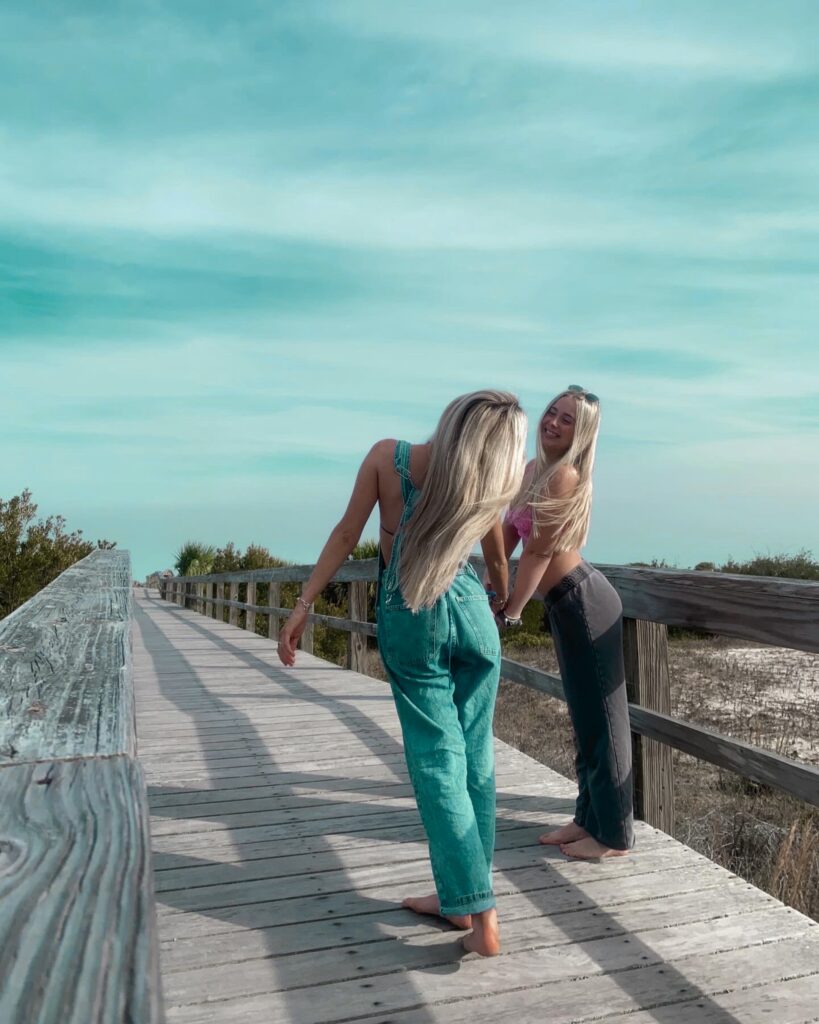
Post It Anyway
If you’re sitting on something right now: a photo, an idea, a piece of yourself you’ve been hesitating to share
This is your sign.
Not when you feel completely ready.
Not when the doubt goes quiet.
Not when everything feels perfect.
Now. Imperfectly. As yourself.
Because the version of you that shows up anyway, even when the doubt is loud, is the version that actually moves things forward.
You know who you are.
Don’t let a scroll session talk you out of it.
If this resonated, save it for the next time you’re feeling unworthy. Or share it with someone who needs the reminder too.
Part of the Unfiltered Tides Series: A series exploring identity, confidence, authenticity, growth, and the evolving experience of becoming yourself in real time.
Short on time? Pin it for later! 🌅📌

Sources
- Bravata, Dena M., et al. “Prevalence, Predictors, and Treatment of Impostor Syndrome: A Systematic Review.” Journal of General Internal Medicine, vol. 35, no. 4, 2020, pp. 1252–1275.
- Fardouly, Jasmine, et al. “Social Comparisons on Social Media: The Impact of Facebook on Young Women’s Body Image Concerns and Mood.” Body Image, vol. 13, 2015, pp. 38–45.
- Sakulku, Jaruwan, and James Alexander. “The Impostor Phenomenon.” International Journal of Behavioral Science, vol. 6, no. 1, 2011, pp. 73–92.
- Vogel, Erin A., et al. “Social Comparison, Social Media, and Self-Esteem.” Psychology of Popular Media Culture, vol. 3, no. 4, 2014, pp. 206–222.