The Things I Finally Understand About My Mom Now That I’m Older
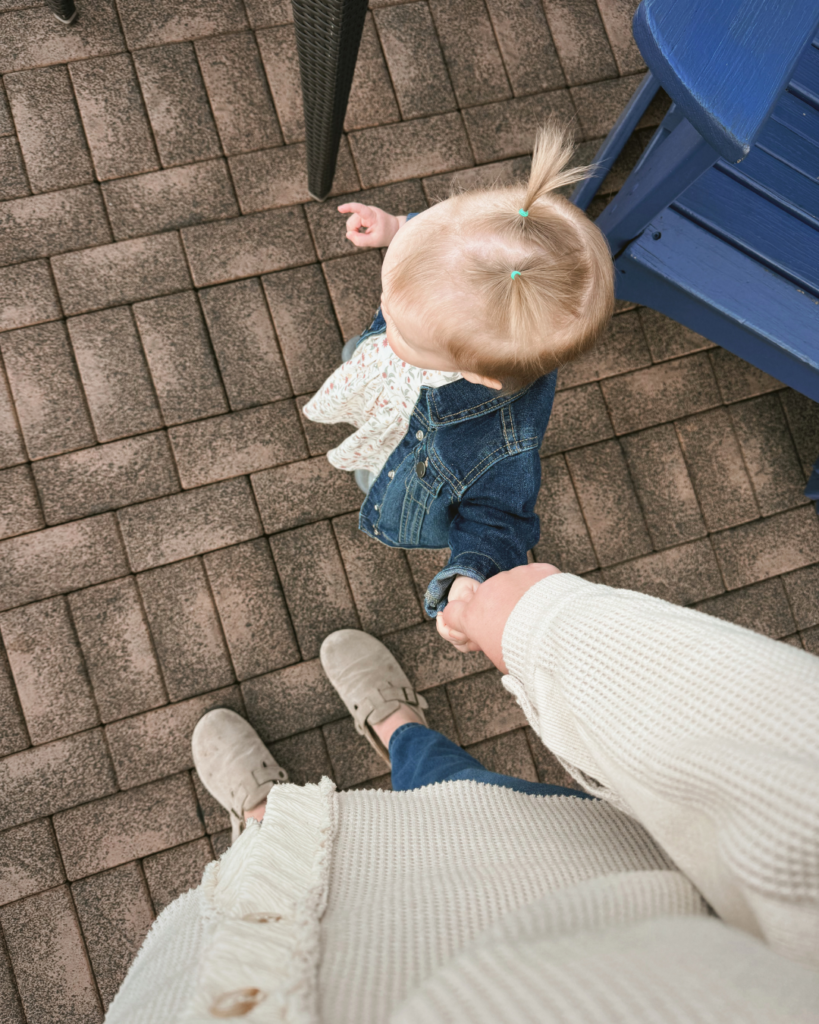
There are things you think you understand when you’re younger, until time quietly proves that you didn’t.
For a long time, I saw my mom through a very specific lens. Not necessarily wrong, just…incomplete. Shaped by where I was at the time, what I could see, what I hadn’t lived yet.
My mom was my rock when I was little. Genuinely. She was there for everything, every lacrosse game, every award ceremony, every talent show. I remember always being able to find her face in the room. That hasn’t changed. But somewhere in the middle, in those complicated teenage years, my perspective on her got murky. Things got rocky between us, and at the time, I put most of that on her.
It took growing up…really growing up…to understand how wrong I was about that.
With her birthday being this week, I’ve been sitting with a lot of reflection about who she is, what she gave me, and how differently I see it all now. This one is for her. And maybe for anyone else who needed a little more time to understand their mom too.
Sometimes growing up is realizing your mom was carrying more than you knew.
The Version of Her I Thought I Knew
When you’re a teenager, your understanding of your parents is limited by your own experience. You see their decisions without the context that shaped them. Their reactions without the history behind them. Their boundaries without knowing what they were trying to protect you from.
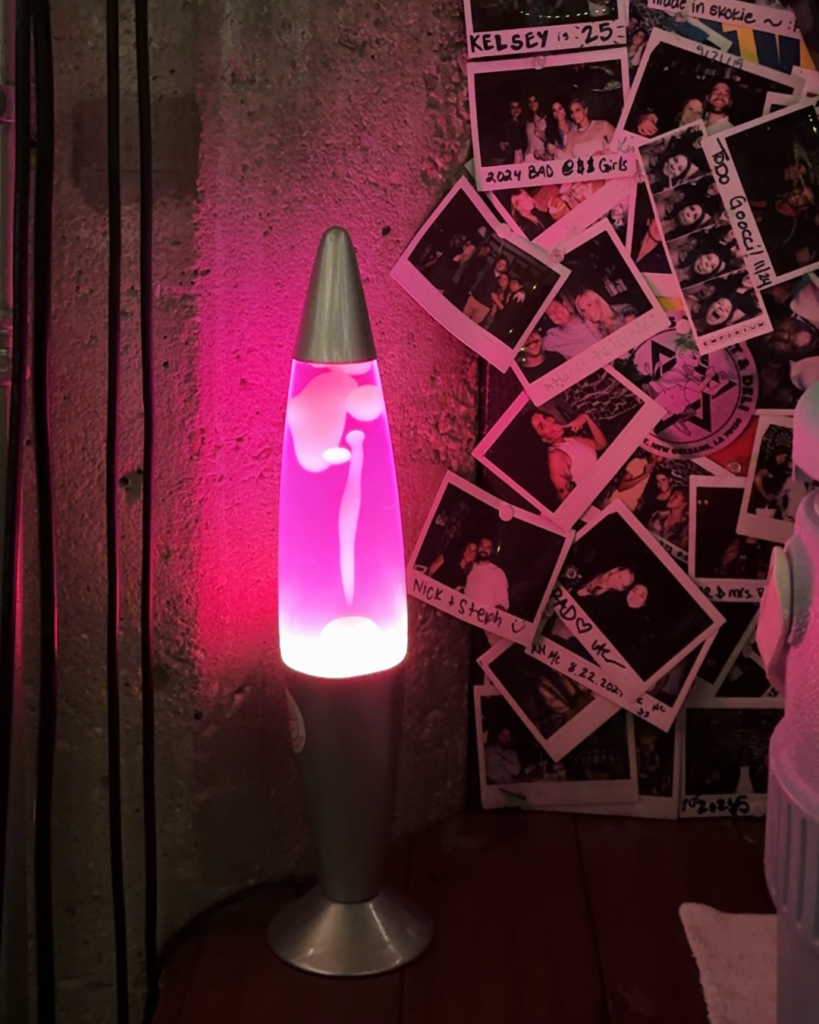
My mom was the disciplinarian. She had a shorter fuse than my dad, and her love has always been what I’d describe as tough. Not soft. Not quiet. Sometimes loud and frustrated and a lot to navigate when I was determined to do things my way.
At the time, I didn’t understand that. I took it personally. I pushed back hard. And I blamed her for a dynamic that I now understand took two people to create: one of whom was a very stubborn, very rebellious version of me.
Research on adolescent development consistently shows that conflict between parents and teenagers is not only common, it’s actually a normal, even necessary, part of growing up. According to researcher Susan Branje, published in Child Development Perspectives, conflict during adolescence is often how young people begin to negotiate their own autonomy and independence from their parents. It’s not a sign that something is broken. It’s a sign that something is developing.
I didn’t know that then. I just knew that things were hard and that it felt easier to put the blame somewhere outside of myself.
What I understand now is that I was only seeing part of the picture.
A gentle reminder: Teenage conflict does not always mean a relationship is broken. Sometimes it means both people are learning how to relate to each other through a completely new stage of life.
What Time and Growth Quietly Revealed
Growing up doesn’t always look like a big, obvious shift. For me, it looked like small realizations stacking quietly over time until the picture changed.
I started to see what I hadn’t been able to see before. The pressure she was under. The fear that drove some of the frustration. The fact that a lot of what felt like friction was actually her trying, desperately, to keep me from making mistakes she already knew the cost of. She saw where I was headed before I did. And she was scared for me, not angry at me.
That realization didn’t come all at once. There was no single moment where everything clicked. It was gradual, the way most real things are. And the more I matured, the more I understood that I was probably the least easy kid to parent through those years. I was rebellious. I pushed limits. I didn’t make it simple for her. And she showed up anyway.
Laurence Steinberg, one of the leading researchers on adolescent psychology, writes extensively about how emotional maturity develops over time and how it fundamentally changes the way people interpret their past relationships and experiences.
Growth doesn’t rewrite the past. It adds context to it.
Who She Actually Is
The things I didn’t fully appreciate about my mom when I was younger are the things I admire most about her now.
She is unapologetically herself. She doesn’t shrink for anyone. She takes up the space she deserves, without apology and without performance. It’s not something she says, it’s just her energy. The way she moves through the world. And I now recognize that quality in myself and know exactly where it came from.
She taught me how to establish real boundaries. How to be independent. How to go after what I actually want in life without waiting for someone to hand it to me. She modeled all of that, not through conversations about it, just by being it every single day.
And she was there for every single thing that mattered to me growing up. Every lacrosse game and she wasn’t just watching, she was out in the backyard helping me practice. Every award I ever won for writing or reading, she was in that room. Every talent show. She was always there, always the face I could find when I needed to.
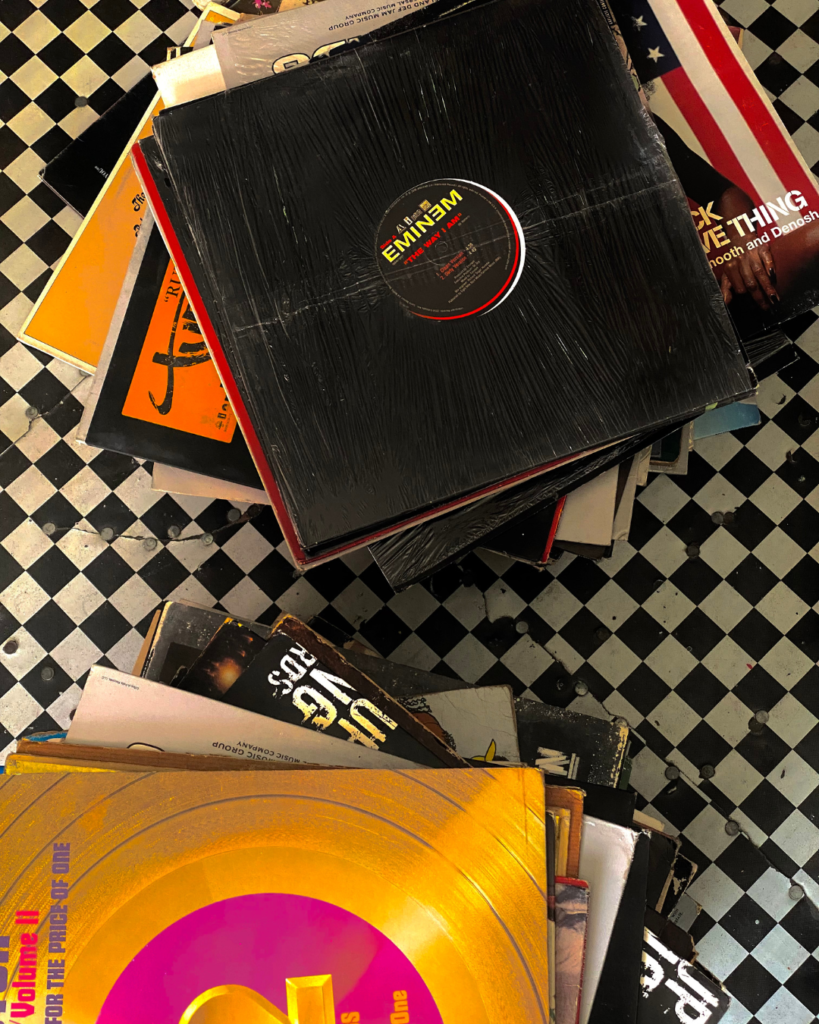
She also gave me some of the best things in my life, including my music taste. She and my dad introduced me to Green Day, and she’s the reason I have a love for vinyl records and the Smashing Pumpkins. She took me to my first concert. These might sound like small things, but they’re woven into who I am. The things that shape your taste and your identity don’t feel small when you look back at where they came from.
People confuse us for sisters. We practically look like twins and it’s one of my favorite compliments, because she’s so pretty. But beyond the surface, the parts of me that I’m actually proud of: the independence, the refusal to shrink, the ability to hold a strong sense of self, those are hers too. I just didn’t know it until I was old enough to recognize them.
Understanding Her Without Rewriting Everything
Understanding your mom more clearly doesn’t mean ignoring what was hard. It doesn’t mean pretending the complicated parts didn’t exist or rewriting your history into something cleaner than it was.
It just means you’re able to hold more than one truth at the same time.
Things were rocky between us. That’s real, but I also know now that she was doing her hardest under pressure I didn’t see, with a kid who didn’t make things easy, and she never stopped showing up. She never abandoned me, even when some of my decisions probably tested every limit she had. That’s not nothing. That’s actually everything.
I don’t blame her anymore. On the contrary, I love her more for putting up with me as well as she did. And I think about what it means that she held on through all of it, because now that I’m a mom myself, raising Fallon and with Finley on the way, I understand the weight of that in a way I never could have before.
According to Laursen and Collins, the parent-child relationship during adolescence is one of the most complex and dynamic relationships in human development, one that both parties are constantly navigating and renegotiating as the child grows.
Understanding doesn’t erase the past. It gives it depth.
What I Want Her to Know
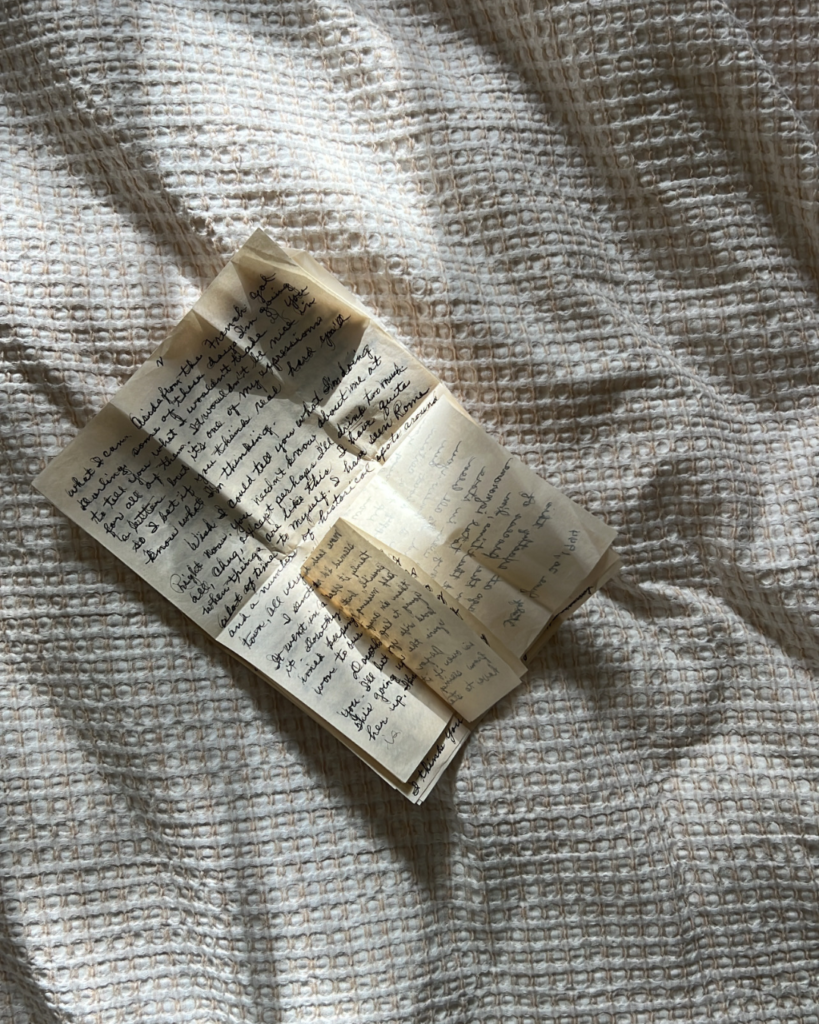
We aren’t a family that says these things out loud easily. Emotional vulnerability has never come naturally in that space, and I’ve made peace with that, but one of the reasons I write is to say the things that are hard to say any other way.
So, Mom, this is me saying it:
I love you more than I know how to express in a conversation. I think about you and everything you’ve done for me more than you probably realize. I would not be who I am without you, the good parts of me, the strong parts, the parts I’m actually proud of. Those are yours. You put them there.
I know that the things I’m going to want to pass on to Fallon: the unapologetic sense of self, the independence, the refusal to make yourself smaller for anyone, I learned those by watching you. And that matters to me more than I can put into words.
Every Mother’s Day and July 10th, I reflect on how much you’ve done and how much you mean to me. I make sure I never let it go uncelebrated, but this year I wanted to put it somewhere more permanent than a card or a text.
You might not think you’re someone special, but I sure do. And I couldn’t live without you.


Sources
- American Psychological Association. “Parenting and Child Development.” American Psychological Association, https://www.apa.org/topics/parenting.
- Branje, Susan. “Development of Parent–Adolescent Relationships: Conflict Interactions as a Mechanism of Change.” Child Development Perspectives, vol. 12, no. 3, 2018, pp. 171–176.
- Laursen, Brett, and Wendy A. Collins. “Parent–Child Relationships During Adolescence.” Handbook of Adolescent Psychology, edited by Richard M. Lerner and Laurence Steinberg, Wiley, 2009.
- Steinberg, Laurence. Adolescence. 11th ed., McGraw-Hill Education, 2016.