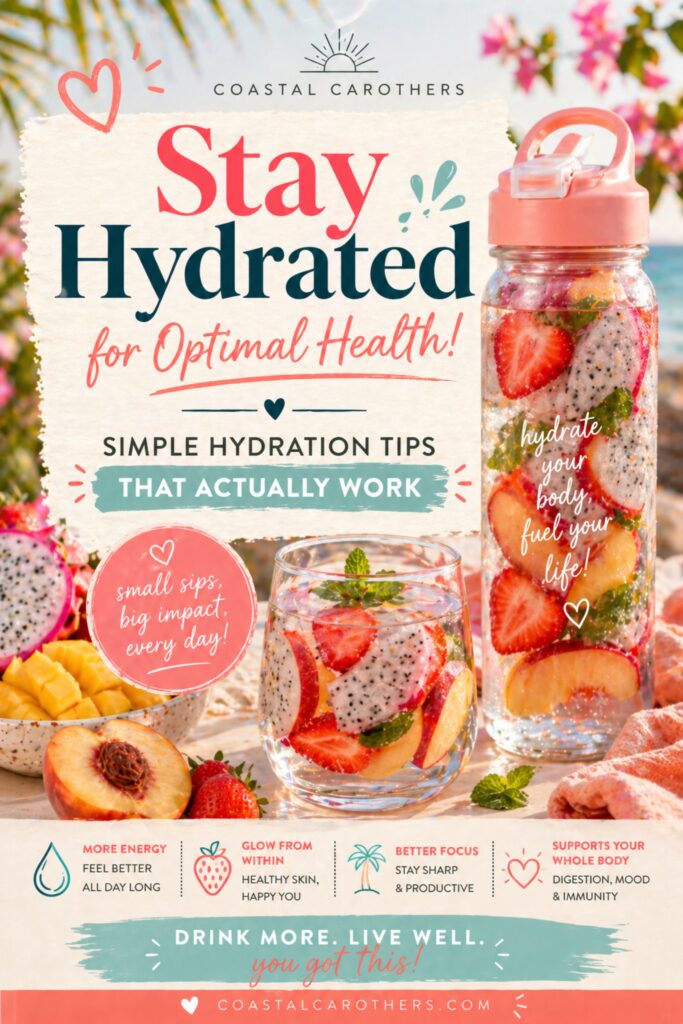
Stay Hydrated for Optimal Health: Simple Hydration Tips That Actually Work
Hydration is one of those things that sounds simple…until you realize how easy it is to fall behind on it.
And when it comes to your health, hydration is one of the most important habits to get right.
Right now, my life looks a little different than it normally does. I’m in a pregnancy and postpartum season, which means my usual fitness and nutrition routines aren’t exactly the same, but that doesn’t mean the basics stop mattering. If anything, they matter more.
And hydration? It’s the foundation of everything.
For now, my fitness and nutrition content will stay pretty light and realistic for this season of life. But later? This is going to be a space I build out a lot more, so if health, fitness, and nutrition are things you’re working on, stick around. In the meantime, you’ll still find plenty here on personal growth, mindset, and overall quality of life.
In this article:
- Why hydration actually matters
- Signs you’re not drinking enough water
- How much water you really need
- My personal hydration habits
- What doesn’t work for me (and why)
- Simple hydration tips that actually help
- A quick hydration checklist
Why Hydration Actually Matters
Water makes up about 60% of the human body, and it plays a role in nearly every major function. From regulating body temperature to supporting digestion, circulation, and beyond, according to Harvard Health Publishing.
Proper hydration helps your body:
- Regulate body temperature
- Support digestion and nutrient absorption
- Transport nutrients to cells
- Lubricate joints and cushion organs
- Maintain energy levels and cognitive function
Even mild dehydration can lead to fatigue, headaches, and difficulty concentrating, meaning hydration affects how you think, feel, and function daily, according to MedlinePlus.
Signs You’re Not Drinking Enough Water
Sometimes dehydration doesn’t feel obvious. It can show up in ways that seem completely unrelated to water intake:
- Fatigue or low energy
- Headaches
- Dizziness
- Dry skin
- Brain fog or difficulty concentrating
- Dark yellow urine
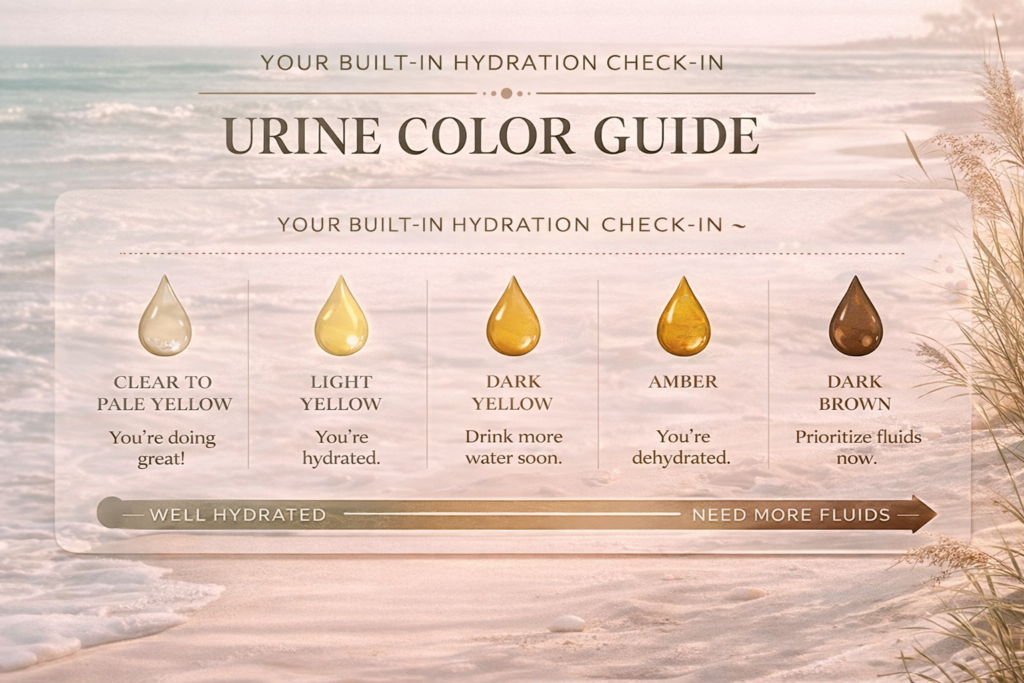
One of the easiest ways to check in with your hydration?
Your urine color.
- Pale yellow to clear → well hydrated
- Dark yellow → drink more water
- Amber or darker → prioritize fluids immediately
It’s one of the most underrated check-in habits you can build.
How Much Water Do You Actually Need?
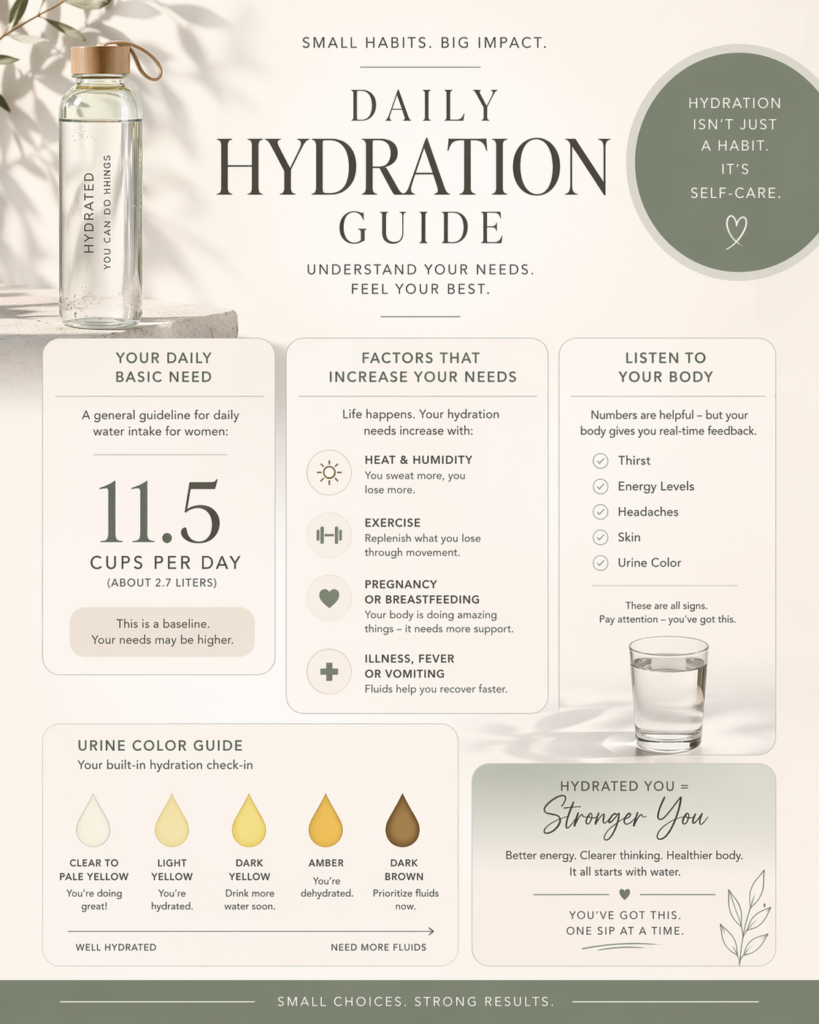
There’s no perfect one-size-fits-all number, but general recommendations suggest about 11.5 cups per day for women (with increased needs during pregnancy, breastfeeding, or physical activity, according to the Mayo Clinic and Harvard Health).
Your needs increase with:
- Heat and humidity
- Exercise
- Pregnancy or breastfeeding
- Illness or fever
Rather than obsessing over hitting an exact number, pay attention to your body.
Thirst, energy levels, and urine color are your most reliable real-time indicators.
My Personal Hydration Habits
I keep it simple.
My daily hydration routine comes down to a few things that actually fit my life without requiring me to think too hard about them:
My HydroJug.
This is my go-to water bottle and the one I use every single day. I’ll be linking both sizes I mention below. I still use their old school 73oz, but their new 40oz would do the job. I chose it specifically because it’s a solid size without being ridiculous. I would never be caught carrying a full gallon jug around. That’s just too tedious for me personally. The HydroJug hits the sweet spot.
Flavored water when plain isn’t cutting it.
I’m not going to force myself to chug plain water when I’m not feeling it. I keep a few of my favorite water flavor packets on hand (linking those too) and it makes a real difference on the days that water just sounds unappealing.
Crushed ice.
This one sounds random but stay with me. When I want something crunchy or feel like mindlessly snacking, crushed ice curbs the craving and gives me a little extra hydration at the same time. It’s one of my favorite low-effort hydration hacks.
Urine color tracking.
This is non-negotiable for me. I have a health condition that makes staying properly hydrated critical, so I’ve made urine color my built-in daily check-in. Clear = I’m doing what I need to do. It’s the simplest accountability system and it costs nothing.
What Doesn’t Work For Me Personally
In the spirit of keeping this real, here are the hydration tips you’ll see everywhere that I’ve genuinely tried and just don’t stick to:
Always keeping water next to me at home.
I know this is one of the most recommended tips and honestly it works great when I leave the house. But at home? I just don’t do it consistently. I’ll forget it’s there. It’s a habit I haven’t cracked yet at home, and I’m not going to pretend otherwise.
Relying on water-rich foods for hydration.
I do eat hydrating foods like fruit and vegetables regularly, but I eat them because they’re good snacks, not as a deliberate hydration strategy. I wouldn’t count on them to cover my water intake.
Sipping water slowly throughout the day.
This is genuinely the better approach…less bloat, fewer bathroom trips, better absorption. I know this. I just have a bad habit of chugging my water instead of sipping it, and no matter how many times I try to change it, that habit will not stick for me. So I’m telling you to do as I say, not as I do on this one.
Not every “perfect habit” fits real life, and that’s okay.
Simple Hydration Tips That Actually Help
Here are realistic ways to stay hydrated without overcomplicating it:
- Use a large water bottle. Less refilling = more consistency. Find one you actually like carrying and keep it with you when you leave the house.
- Add flavor if plain water isn’t appealing. There’s no award for suffering through water you don’t want to drink. Flavor it and move on.
- Sip throughout the day. Your body absorbs it better, you’ll feel less bloated, and you’ll make fewer emergency trips to the bathroom.
- Pair with habits. Drink a glass with every meal, when you take medication, first thing in the morning. Anchoring it to something you already do makes it automatic.
- Eat hydrating foods. Fruit, cucumbers, leafy greens. They contribute to your overall hydration and make great snacks in between meals.
- Check your urine color. Pale yellow to clear means you’re doing well. Dark yellow means you need more water. It’s the simplest and most honest check-in you’ve got.
Quick Hydration Checklist
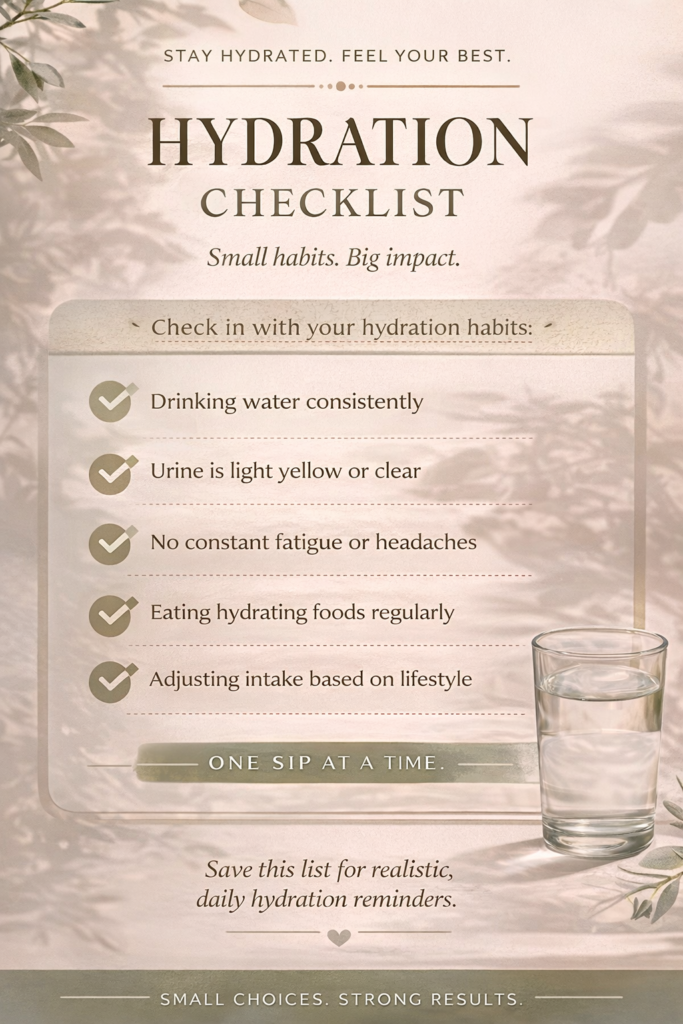
✔ Drinking water consistently throughout the day
✔ Urine is light yellow or clear
✔ Not experiencing constant fatigue or headaches
✔ Eating hydrating foods as part of regular meals or snacks
✔ Adjusting intake based on activity level, heat, or health changes
Final Thoughts
Hydration isn’t complicated. But it’s one of the easiest things to overlook, especially when life is full and your attention is pulled in a hundred different directions.
You don’t need a perfect routine. You just need something consistent.
If you’re working on improving your health in even small ways, start here.
And if you’re in a season like mine? Give yourself grace.
Even the basics count.
What’s your go-to hydration habit? I’m always looking for realistic tips that actually stick, drop yours in the comments.
Short on time? Pin it for later! 🌅📌

Sources
- “Dehydration.” MedlinePlus, medlineplus.gov/dehydration.html.
- “Importance of Staying Hydrated.” Harvard Health Publishing, www.health.harvard.edu/staying-healthy/the-importance-of-staying-hydrated.
- “Water: Essential for Your Body.” Mayo Clinic, www.mayoclinic.org/healthy-lifestyle/nutrition-and-healthy-eating/in-depth/water/art-20044256.