The Wildest Diet Trends of the 2000’s and 2010’s: A Millennial Girl’s Survival Story
If You Had a Tumblr Account, You May Be Entitled to Financial Compensation
Let’s set the scene.
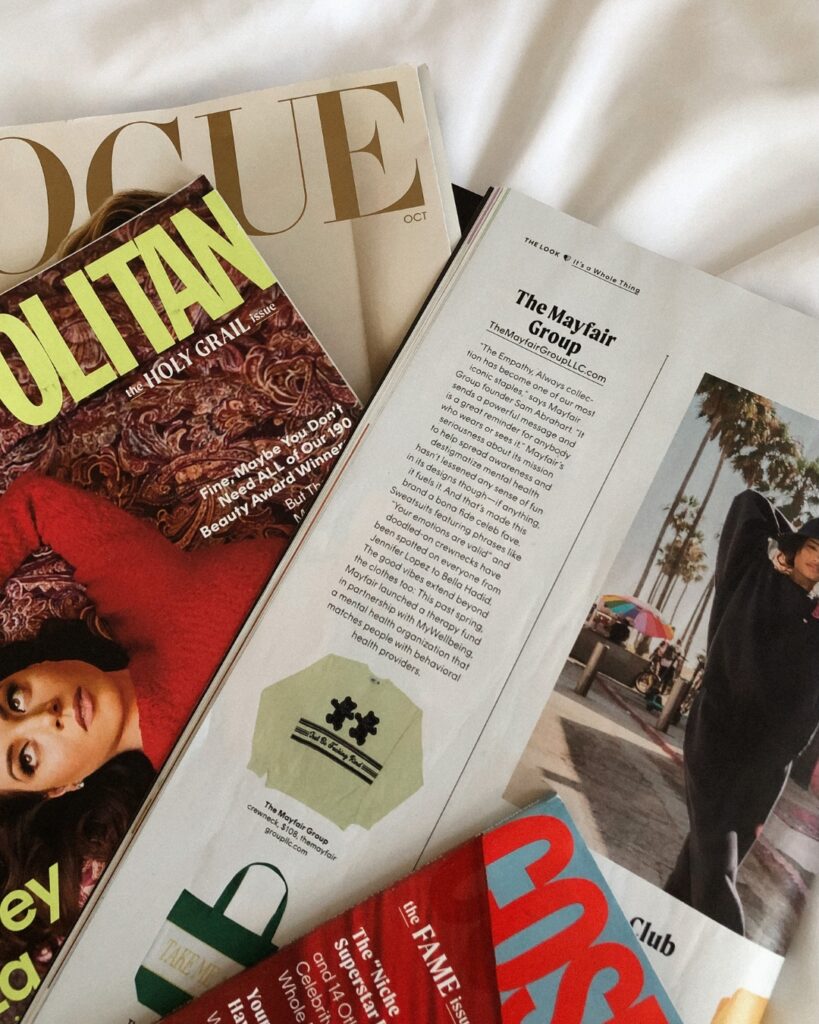
It’s the early 2000s. You have a Seventeen subscription. You have a CosmoGirl subscription. You possibly have a Teen Vogue subscription too, because you are nothing if not thorough. The Victoria’s Secret Fashion Show airs every November and you watch it like it’s the Super Bowl. Your Tumblr dashboard is a scroll of “thinspo” aesthetics, quote graphics, and fitness boards that promise a flat stomach in 10 days if you just do this one thing.
You are a girly girl. You love fashion. You love beauty. You love fitness and feeling your absolute best. And because you love all of those things, you are seeing every single wellness trend that comes down the pipeline and, let’s be honest, trying a significant number of them.
That was me. And if it was also you? This article is for us.
Looking back, the collective nutrition advice we received and willingly followed during this era was… something. Some of it was harmless and just very, very bad logic. Some of it was genuinely concerning. And some of it…we’ll get to the cotton balls lol, don’t worry…was truly unhinged.
Grab your Juicy Couture tracksuit.
Pour yourself a Crystal Light.
Turn on “The Hills.”
We’re going back.
Why Diet Culture Felt So Different Back Then
Before we get into the actual trends, it’s worth asking: why did we believe any of this?
The answer is a perfect storm of magazine culture, early celebrity social media, and a near-total absence of evidence-based nutrition content reaching mainstream audiences. The wellness industry of the early 2000s was not built on peer-reviewed research, it was built on celebrity endorsements, editorial spreads, and the aspirational fantasy of looking like an Angel on a runway. Celebrity diets drove enormous behavioral change during this period because the sources felt credible and aspirational in a way that medical advice simply did not.
If a Victoria’s Secret model said she did it, or a tabloid claimed a celebrity used it, or a glossy magazine featured it next to a before-and-after photo spread, it was happening. We were the first generation of girls online and deeply, deeply influenced by what we saw.
That’s not a character flaw. It’s just what it was. And now we get to look back and laugh. And now we get to laugh at the chaos with the benefit of hindsight.
“The 2000s really convinced an entire generation of girls that lemon juice, cabbage soup, and cereal were the secret to happiness.”

💡 Remember

Most fad diets work the exact same way:

• fewer calories
• less water retention
• temporary weight loss

The method changes.

The biology usually doesn't.
The 10 Craziest Diet Trends We Somehow Thought Were a Good Idea (Don’t Lie, I Know You Tried One Too)
01. The Master Cleanse
What It Was: Ten or more days of nothing but a mixture of lemon juice, maple syrup, cayenne pepper, and water, supplemented by a saltwater flush every morning and laxative tea at night. That’s it. That’s the entire diet.
Why It Became Popular: The Master Cleanse was actually developed back in the 1940s by Stanley Burroughs, who originally intended it to treat ulcers. It languished in alternative health circles until the early 2000s, when celebrity buzz, most famously reports that Beyoncé used it to prepare for her role in Dreamgirls, catapulted it into mainstream obsession. Suddenly everyone had a lemon, a bottle of cayenne, and extremely high hopes.
What Research Says: There is no scientific evidence that the Master Cleanse removes toxins from the body. None. Your liver and kidneys already handle detoxification without your help: “Detox is a physiologic function, not a drink recipe,” as one medical team put it. Any weight lost on the cleanse is primarily water, glycogen, and lean tissue from severe calorie restriction. Not fat, and definitely not “toxins.” Most of it comes back when you resume eating normally. The cleanse runs between 600 and 1,200 calories per day, well below the recommended adult intake, and is deficient in basically every nutrient your body actually needs.
I did actually try this one…IN MY DEFENSE…I only made it halfway through the full “plan” and I love spicy so it was a selfish choice to binge Cayenne. My stomach was a wreck, gurgling and moaning, and I was starving (believe it or not lol). If you wanted to LOOK skinny within a week for a specific event, I wouldn’t RECOMMEND this “diet”, but it would definitely eliminate the bloat. You just have to decide if sacrificing every bit of energy and happiness is worth it.
2026 Rating: Girl, what were we doing? Lol
⚠️ Reality Check: Your liver and kidneys already detox your body. No lemonade required.
02. The Victoria’s Secret Angel Diet
What It Was: Technically, there was no single Victoria’s Secret Angel Diet. Which, I know, is devastating to hear if you felt the same intense joy I did finding this “diet” as a teen. Each model followed her own eating and training plan. But media coverage of the era created a mythology around it: ultra-clean eating, extremely low calories, intense restriction, and an unattainable lifestyle that millions of girls tried to replicate based on magazine spreads and the occasional interview quote.
Why It Became Popular: Victoria’s Secret was a cultural institution in the 2000s. The annual Fashion Show was a televised event. The Angels were aspirational figures in a way that was completely unavoidable if you were a fashion-conscious girl of that era. If they ate a certain way (or were reported to eat a certain way) it was going to influence behavior on a massive scale.
What Research Says: Research on the modeling industry tells a more sobering story than the glossy magazine version. A 2024 study published in Frontiers in Psychiatry found that 78.6% of fashion models reported controlling their food intake, with 40.5% using extreme calorie restriction. Think: bikini competitor intensity 24/7 for an undisclosed amount of time. A review by Abbey’s Kitchen noted that 81% of models have a BMI in the underweight category, and over 60% have been told to lose weight by their agents. What the magazines sold as aspirational was, in many cases, driven by intense occupational pressure rather than genuine wellness.
I definitely shared and saved the Victoria Secret model diets and workouts…alas…never got my beautiful abs this way.
2026 Rating: Girl, we just wanted some sexy abs! Sustainable? Absolutely not.
03. Skinny Teas and Flat Tummy Teas
What They Claimed: Debloating. Weight loss. Detoxification. A flat stomach in 28 days. Transformational results that would change your entire relationship with your waistband.
Why They Became Popular: Early Instagram and social media influencer culture turned these products into a phenomenon. Celebrities and influencers posted sponsored content with the teas at nearly every turn. The branding was impeccable: aspirational, feminine, effortless. The packaging alone deserved a photoshoot.
What Research Says: The effects were primarily temporary water loss. Many skinny and flat tummy teas contained stimulant or laxative ingredients (which explains the “debloating” effects) and also explains why you did not want to be far from a bathroom. There is no credible evidence that these products produce meaningful fat loss, and the “detox” claims have no scientific foundation.
My Take: The branding budget on these products genuinely deserved an award. An absolutely elite marketing achievement. Influencer culture is what ultimately made these teas pop off to an unreal degree.
2026 Rating: The marketing strategy deserved awards.

04. The Cabbage Soup Diet
What It Was: A 7-day plan centered on eating as much homemade cabbage soup as you wanted, paired with a rotating schedule of specific foods on each day: fruits one day, vegetables another, meat on certain days. But cabbage soup at every meal, every single day, without exception.
Why It Became Popular: The Cabbage Soup Diet had been floating around since the 1980s but surged again in the early 2000s as a quick-fix solution. It promised rapid weight loss in a week, sometimes as much as 10 pounds, which was a promise that was essentially impossible to ignore in the era of crash diets.
What Research Says: Any rapid weight loss from the Cabbage Soup Diet is almost entirely from severe calorie restriction and water loss…not fat loss. The diet is extremely low in protein, not sustainable beyond the 7-day period, and most of the weight returns when normal eating resumes. Mayo Clinic and other nutrition authorities consistently classify this as a fad diet with no evidence of long-term benefit.
My Take: Genuinely respect the commitment this required. Cabbage soup. Every day. For a week. We were built different. I could never partake in this one…yikes…
2026 Rating: The smell alone should have stopped us.
05. The Baby Food Diet
What It Was: Replacing one or two daily meals (or, in more extreme versions, all solid meals) with small jars of baby food. The idea was portion control and calorie reduction disguised as a very small jar of pureed peas.
Why It Became Popular: Trainer Tracy Anderson was reportedly behind popularizing this in the early 2010s, with tabloid coverage connecting it to celebrity clients. The promise of built-in portion control with no cooking or decision-making was appealing in a culture that was obsessed with effortless weight loss.
What Research Says: Baby food is not formulated for the nutritional needs of adults. It’s very low in calories, very low in protein, and offers very little satiety. There’s no research supporting it as an effective or sustainable adult weight-loss strategy. The weight loss that occurred was purely from calorie restriction. Also: adults have teeth. We could have just…eaten real food in smaller portions.
My Take: Respectfully, why? But also, and I cannot stress this enough, I’d still consider it just as an excuse to eat some strawberry banana baby food on the daily.
2026 Rating: Respectfully…why? But lowkey…delicious
06. The HCG Diet
What It Was: A deeply restrictive 500-calorie-per-day eating plan paired with human chorionic gonadotropin (HCG, a hormone produced during pregnancy) in the form of injections, drops, or supplements. Proponents claimed HCG suppressed hunger and targeted fat stores while the extreme calorie restriction produced rapid weight loss.
Why It Became Popular: Variations of the HCG diet have surfaced repeatedly since British physician Albert Simeons introduced the concept in 1954. It resurfaced aggressively in the early 2000s, marketed by clinics and online vendors with promises of losing 20 to 30 pounds in 30 to 40 days.
What Research Says: The FDA has explicitly warned against HCG diet products and has never approved HCG for weight loss purposes. As the FDA’s own product labeling requires: “There is no substantial evidence that it increases weight loss beyond that resulting from caloric restriction.” Multiple independent studies have confirmed HCG has no meaningful effect on fat mobilization or appetite suppression. The weight loss from the HCG diet comes entirely from eating 500 calories a day, which is a level the FDA describes as not only unhealthy but potentially dangerous.
My Take: Five hundred calories a day. Five. Hundred. That’s less than some people’s afternoon snack. I cannot even fathom.
2026 Rating: One of the more concerning trends.
07. Juice Cleanses
What They Were: Replacing all solid food with cold-pressed juices for anywhere from three days to a full week or longer. The juice cleanse market exploded in the 2010s as cold-press technology made boutique juice bars and home delivery cleanses both aspirational and accessible. I still see this trend here and there.
Why They Became Popular: The branding around juice cleanses was genuinely beautiful. The juices looked incredible. The marketing promised everything: reset your gut, clear your skin, detox your system, lose weight, feel lighter. Celebrities were photographed with their green juices. Instagram made the whole thing look like a wellness ritual worth aspiring to.
What Research Says: Juice cleanses can reduce calorie intake, which is why some people lose weight on them. However, they are typically low in protein (which means low satiety and potential muscle loss), they provide no proven detox effect, and the weight lost is primarily water weight that returns quickly. Harvard Health and the National Center for Complementary and Integrative Health both note there is little compelling evidence for any meaningful detox effect from cleanses.
My Take: Okay but some of those juices genuinely tasted incredible and I’m not going to pretend otherwise. Were they magic? No. Were they delicious? Several of them, yes.
2026 Rating: Delicious. Not magical.
08. The Cotton Ball Diet
⚠️ This trend wasn't just ineffective, it was dangerous. Doctors warned it could cause intestinal blockages and require emergency surgery.
What It Was: I have to include this one because it was real and it was absolutely unhinged. Girls…primarily teenagers and models, reportedly were soaking cotton balls in juice, smoothies, or orange juice and swallowing up to five of them at a time. The idea was to feel full without consuming calories. I cannot stress enough: these were not actual cotton balls in many cases. Most commercial “cotton balls” are made of bleached polyester.
Why It Became Popular: The trend gained mainstream attention in 2013 after model Bria Murphy mentioned hearing about it in the modeling industry during a Good Morning America interview. The mention sent it viral across social media and YouTube. Experts at the time noted it was not new, it had reportedly existed in modeling circles for years under the radar before the broader public became aware of it.
What Research Says: Doctors described this as potentially surgical-emergency-level dangerous. Cotton balls (or polyester balls, more accurately) cannot be digested. They accumulate in the stomach and intestines, potentially forming a mass called a bezoar that can cause life-threatening intestinal obstruction requiring emergency surgery. Risk of choking. Risk of malnutrition. Risk of introducing bleach and synthetic fibers into your digestive system. Experts classified eating cotton balls as a form of pica, a recognized eating disorder involving consumption of non-food items.
My Take: We have genuinely reached peak absurdity. This is not a diet. This is the call coming from inside the house.
2026 Rating: This is an episode on TLC I’m pretty sure…

09. The Special K Challenge
What It Was: A 14-day plan created and marketed by Kellogg’s in 2004 that involved replacing two meals per day with a bowl of Special K cereal and low-fat milk. The third meal could be a balanced, low-calorie dinner. Kellogg’s claimed participants could “lose up to six pounds” or “drop a jean size in two weeks.”
Why It Became Popular: It was simple, cheap, and came with the credibility of a major brand behind it. No meal prep. No food lists. No counting. Just cereal. The messaging was perfectly calibrated for a busy woman who wanted results without complexity. It was everywhere: on-pack, in commercials, in women’s magazines.
What Research Says: The diet works because you’re eating significantly fewer calories, a bowl of Special K with low-fat milk is roughly 200 calories. Replace two meals with that and you’ve created a substantial calorie deficit. The cereal itself has no special metabolic property. A Kellogg’s-funded study found the challenge reduced total calorie intake by an average of 673 calories per day, which, as nutrition experts note, would cause weight loss no matter what food you substituted. It was funded by Kellogg’s. The cereal was not magic. The deficit was.
My Take: Kellogg’s ate with this campaign. Truly iconic marketing. Convince an entire generation that your branded cereal is a weight loss tool. Icons only.
2026 Rating: The marketing team ate and it wouldn’t even take this much to convince me to eat 2 bowls of cereal a day.
10. The Cookie Diet
What It Was: Dr. Sanford Siegal’s Cookie Diet, launched in the 1970s but popular in the 2000s, involved eating six specially formulated high-protein meal-replacement cookies throughout the day, totaling around 500 calories, followed by a dinner of lean protein and vegetables. The cookies were designed with a proprietary amino acid blend purported to suppress hunger.
Why It Became Popular: Because it was a diet where you ate cookies. Six times a day. The marketing wrote itself. Celebrity sightings with the cookies in the mid-2000s boosted visibility, and the novelty factor made it a conversation piece in a crowded diet market.
What Research Says: Like nearly every trend on this list, the Cookie Diet’s weight-loss results come from calorie restriction, not from anything special about the cookies. The total daily intake is extremely low. No peer-reviewed evidence supports the proprietary hunger-suppression claims beyond what would be expected from high protein content generally. Registered dietitians consistently classify it as an unsustainable, nutritionally inadequate approach to weight management.
My Take: Honestly? Out of the more questionable entries on this list, this one wins on the concept alone. You convinced me to eat six cookies a day and call it a diet. Impressive.
2026 Rating: One of the better-tasting bad ideas.
The Biggest Thing These Diets Had in Common
Looking at all ten of these together, the pattern becomes almost painfully obvious.
Nearly every single trend on this list relied on the same mechanisms: severe calorie restriction, dramatic elimination of food groups, unverified detox claims, and the promise of rapid results. Not one of them was built on a foundation of sustainable nutrition science. They were built on aspiration, celebrity association, and the eternal human desire to find a shortcut that actually works. Has much really changed? 🤷🏼♀️
Research consistently finds that sustainable weight management is associated with adequate protein intake, balanced eating patterns, realistic calorie deficits, and, most importantly, adherence over time. Not cayenne lemonade. Not six cookies. Not cereal twice a day. Not cotton balls soaked in orange juice. (Especially not that last one.)
The 2000s really looked at the concept of hunger and said: make it aesthetic.
What I Actually Learned From All of This
Here’s my honest reflection, looking back:
I don’t regret being fascinated by nutrition and wellness. That curiosity has never gone away and I think it served me well in the long run, it eventually pushed me toward actually learning how nutrition works, which is a very different thing from following a lemon juice cleanse for ten days because Beyoncé may or may not have done it.
I also, genuinely, don’t regret falling for the fads. They did no lasting harm to me, and it is pretty hilarious in retrospect that I thought I could achieve Victoria’s Secret Angel physique by living off cayenne and maple syrup. The gullibility was part of the era. We were all in it together.
What I eventually learned is that there’s no shortcut that actually works long-term. I learned what macros are and how to actually use them. I learned how to build eating habits I can actually maintain. I learned that feeling your best isn’t about extreme restriction, it’s about building something realistic and sustainable that you actually enjoy. See Understanding Macros (Made Simple), High Protein Snack Foods You Can Grab & Go, and Are You Actually Drinking Enough Water? for what I actually use and recommend now.
Final Thoughts: A Millennial Girl’s Survival Confirmed
We made it. Against all odds, through the Master Cleanse and the skinny teas and the cotton balls that weren’t even cotton, we survived the diet culture of the 2000s and 2010s and came out the other side with (mostly) our dignity intact.
Tbh, I really cannot wait to see what the next completely unhinged wellness trend is lol. I will absolutely read every word written about it. I might even be mildly curious. I’m not saying I’d try it…but I’m not saying I wouldn’t just for a throwback. LOL
I’m just a girl.
But these days, I know enough to enjoy the entertainment value without believing every promise attached to it. And I know that the best “diet” is the one that doesn’t feel like a punishment, the one you can actually stick to, that actually fuels you, and that lets you live your real life without surviving entirely on lemonade and ambition.
Which one of these did you try? Be honest, I will not judge you…unless it was the cotton balls. LOL JKJK Drop it in the comments. It’s a safe space here.
Short on time? Pin it for later! 🌅📌

Sources
- Bogár, Nikolett, et al. “Increased Eating Disorder Frequency and Body Image Disturbance Among Fashion Models Due to Intense Environmental Pressure: A Content Analysis.” Frontiers in Psychiatry, vol. 15, 2024, https://pmc.ncbi.nlm.nih.gov/articles/PMC11021945/.
- Cleveland Clinic Staff. “HCG Diet for Weight Loss: Is It Safe?” Cleveland Clinic, health.clevelandclinic.org/hcg-diet.
- Eureka Health. “Is the Master Cleanse (Lemon, Cayenne, Maple Syrup Fast) Safe or Effective? A Medical Breakdown.” Eureka Health, www.eurekahealth.com/resources/master-cleanse-lemon-cayenne-maple-syrup-fast-en.
- Grefe, Lynn, and Karmyn Eddy. Quoted in “Dangerous Diet Trend: The Cotton Ball Diet.” ABC News, 21 Nov. 2013, abcnews.go.com/Health/dangerous-diet-trend-cotton-ball-diet/story?id=20942888.
- Healthline Editors. “The Master Cleanse Diet Review.” Healthline, www.healthline.com/health/master-cleanse-diet.
- Healthline Editors. “4 Ways the Cotton Ball Diet Could Kill You.” Healthline, www.healthline.com/health/eating-disorders/ways-the-cotton-ball-diet-could-kill-you.
- Henriksen, Rick. “The Truth About Detox Diets.” University of Utah Health, healthcare.utah.edu/healthfeed/2014/09/truth-about-detox-diets.
- Kaur, Paramvir. “The Special K Diet: Was Kellogg’s Weight-Loss Plan Too Good to Be True?” Omaha Magazine, Dec. 2024, www.omahamagazine.com/60/the-special-k-diet-was-kelloggs-weight-loss-plan-too-good-to-be-true/.
- Mayo Clinic Staff. “HCG Diet: Is It Safe and Effective?” Mayo Clinic, www.mayoclinic.org/healthy-lifestyle/weight-loss/expert-answers/hcg-diet/faq-20058164.
- U.S. Food and Drug Administration. “Avoid Dangerous HCG Diet Products.” FDA, www.fda.gov/consumers/consumer-updates/avoid-dangerous-hcg-diet-products.
- U.S. Food and Drug Administration. “Questions and Answers on HCG Products for Weight Loss.” FDA, www.fda.gov/drugs/medication-health-fraud/questions-and-answers-hcg-products-weight-loss.
- Watson, Stephanie. “Master Cleanse (Lemonade) Diet Review, Ingredients, Effectiveness.” WebMD, www.webmd.com/diet/lemonade-master-cleanse-diet.
- Wikipedia Contributors. “Cotton Ball Diet.” Wikipedia, Wikimedia Foundation, en.wikipedia.org/wiki/Cotton_ball_diet.
- Wikipedia Contributors. “Master Cleanse.” Wikipedia, Wikimedia Foundation, en.wikipedia.org/wiki/Master_Cleanse.